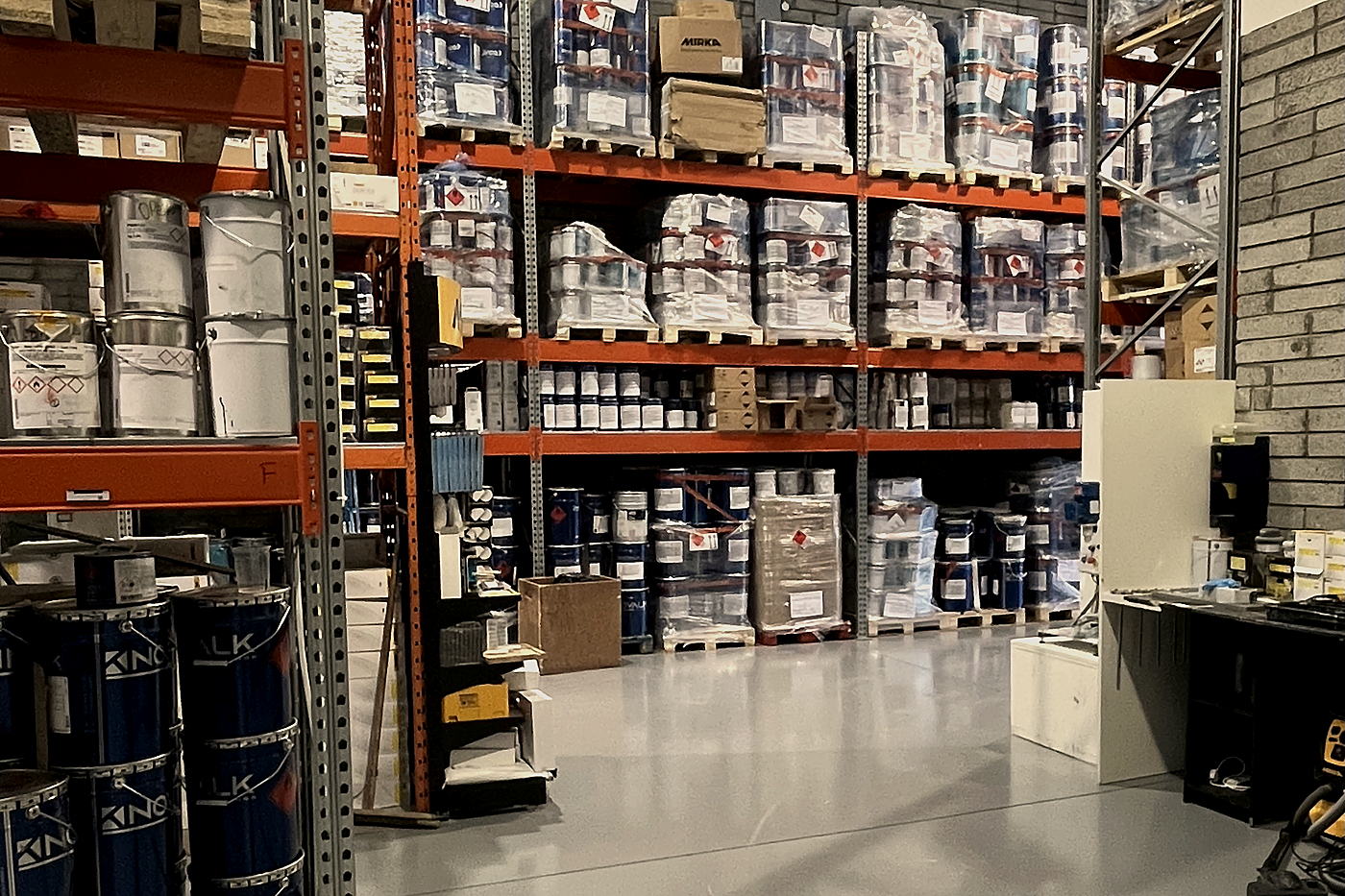
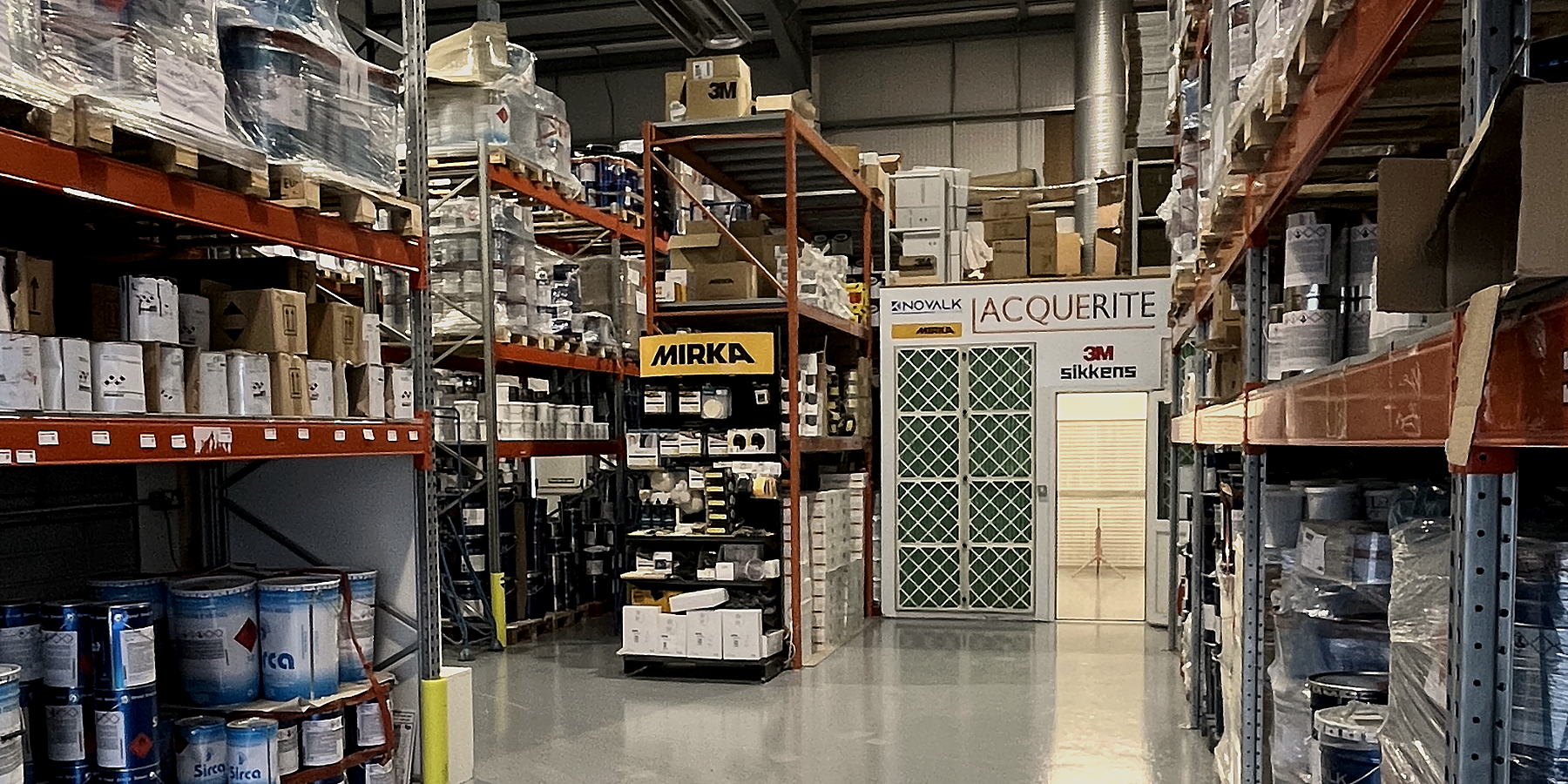
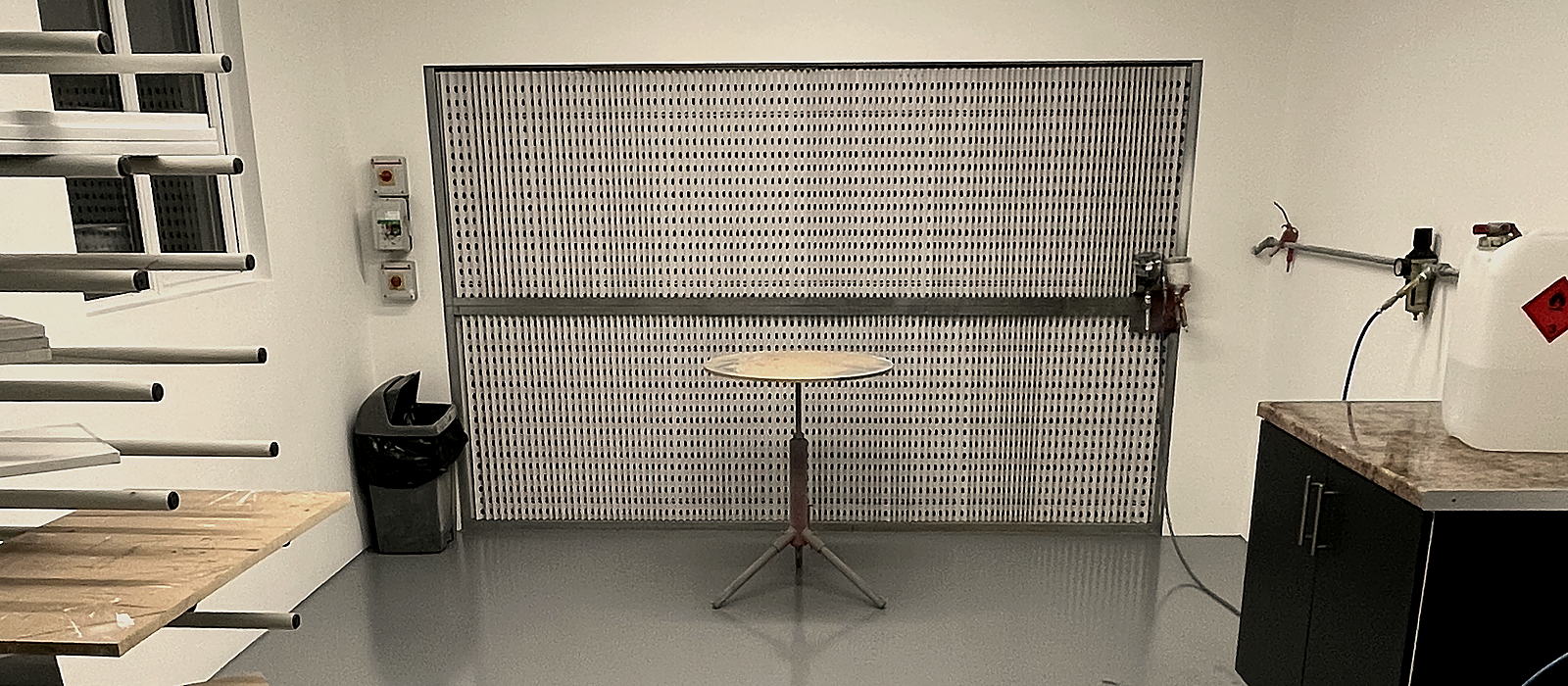
Irish workshops are not warehouses. A spray shop in a shed, a unit on an industrial estate, or a mezzanine over the joinery bench all count as “storage” the moment a tin arrives from Tullamore. How you keep that tin decides whether the next door matches the last one.
Keep it in the range the tin was made for
Solvent lacquers and waterborne systems do not like the same extremes, but both fail if they freeze or cook.
- Do not store waterborne product where a frost can get it. A frozen tin can look fine until you spray: the binder has broken and the film goes cloudy or powdery.
- Do not park solvent tins against a south-facing tin wall in July. Heat raises pressure, thins the product in the can, and makes sheen and flow unpredictable.
- Aim for a steady indoor range, roughly the same as the booth you will spray in. If the lacquer is at 8°C and the workshop is at 18°C, give it time on the bench before you catalyse.
If a delivery sits on a porch over a Friday night in January, open the tins on Monday and look before you mix. We would rather replace a suspect tin than watch a kitchen run fail.
Close it like you mean it
A partly used 20 litre left with the lid cocked is how you get skin, gel and a colour that is no longer the formula we stored for you.
- Reseal immediately after pouring. Wipe the rim. Seat the lid with a rubber mallet, not a screwdriver through the lug.
- Decant what you will spray that session. Do not catalyse the whole drum “to save time”.
- Label opened tins with the date, the sheen and, if it is a matched colour, the Lacquerite code. The next person on the gun should not have to guess.
Catalysts, hardeners and isocyanate products belong closed, upright and away from the tea station. Read the safety data sheet for the product in front of you, not a generic booth rule.
Stacking, rotation and the “we will use it sometime” shelf
First in, first out still applies when the tin is expensive. Put new stock behind opened stock. Do not bury a special sheen at the back of the rack because a standard matt is easier to reach.
Uncommon sheens and matched colours should not live on that shelf for months “in case the client comes back”. If a programme is paused, call us. It is cheaper to plan a fresh batch than to spray three-year-old stock and discover the film is no longer what the spec asked for.
Waterborne needs cleaner kit, not just a warmer room
If you have moved a line onto water based lacquer, storage is only half the job. Dedicated lines, clean pots and gun wash meant for waterborne stop you seeding the next mix with solvent residue. A viscosity cup rinsed in the wrong wash will put fisheye into an otherwise good sealer.
What to tell us when you reorder
If a tin behaved oddly — skin, settlement that will not stir out, a sheen that flashed higher than last month — say so when you order. Give us the batch if you still have the label. That is how we tell a storage problem from a production one.
Next day delivery from Tullamore is useful only if the product is still the product when you open it. Store it as carefully as you spray it.